


The modern way of life, full of obligations and pressure, is often linked to episodes of insomnia – one of the most significant challenges to our physical and mental health. Yet stress and insomnia are a curious “pair” that, whatever the source of the trouble in each case, end up in a vicious circle that traps us and that we must break.
Stress & poor sleep
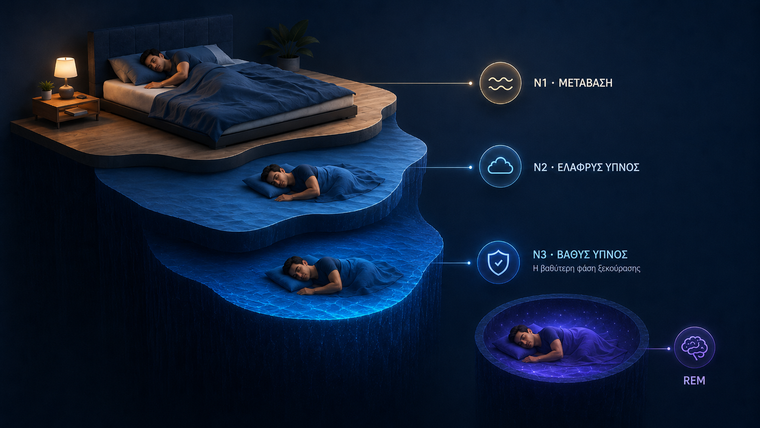
The relationship between stress and poor-quality sleep is well known to everyone. Studies show that chronic stress can lead to sleep disorders and, conversely, lack of sleep can make stress worse (National Sleep Foundation, 2020). During the night, the brain needs quality sleep to process emotions and information. When this does not happen, our ability to cope with challenges drops significantly.
Break the cycle of insomnia!
To improve the quality of your sleep and reduce stress, you need to create the right conditions that promote healthy sleep.
The body “knows”
Sleep is not a luxury, but a fundamental need for our survival and our ability to function. When we sleep well, our body recovers its strength and supports the work of the immune system. According to research by Harvard Medical School (2021), lack of sleep can disturb the hormonal balance, raising levels of cortisol (the stress hormone).
That is why, when we feel tired and sleepy, regardless of our problems or daily obligations, we should press pause and simply go to sleep to meet this need, as we would with any other bodily need.
The power of the mattress
A quality sleep mattress can contribute even more to this. Choosing a mattress that supports the spine and provides comfort according to our particular needs reduces the likelihood of waking during the night, while raising overall levels of rest. Studies show that improving sleep through the right support for the body helps reduce the symptoms of stress (Sleep Medicine Reviews, 2018).
Relaxation techniques
Besides investing in a good mattress, relaxation techniques before bed can help calm the mind. Research by the American Institute of Stress (2022) suggests meditation and deep breathing as effective methods for preparing for sleep. In addition, a warm bath before bedtime helps lower body temperature and promotes a feeling of relaxation.
Better sleep, fewer thoughts…
…and fewer thoughts means less stress! We have talked before about the negative consequences of overthinking! The interaction between sleep and emotional wellbeing works both ways, and improving one has a positive effect on the other.
*This article was written on the occasion of International Stress Awareness Day, which has been established for the first Wednesday of November.
Sources:
– National Sleep Foundation, 2020, “The Connection Between Sleep and Stress.”
– Harvard Medical School, 2021, “Sleep and Health: The Importance of Rest.”
– Sleep Medicine Reviews, 2018, “The Role of Mattress Comfort in Sleep Quality.”
– American Institute of Stress, 2022, “Stress Management Techniques for Better Sleep.”




DISCUSSION
Readers’ comments.