


Deep sleep is the stage of sleep in which the body rests the most and repairs itself. You cannot order it, but you can create the conditions for it: a steady schedule, a calm evening and a room that helps. Below you can see what it is and 10 habits that help.
What deep sleep is
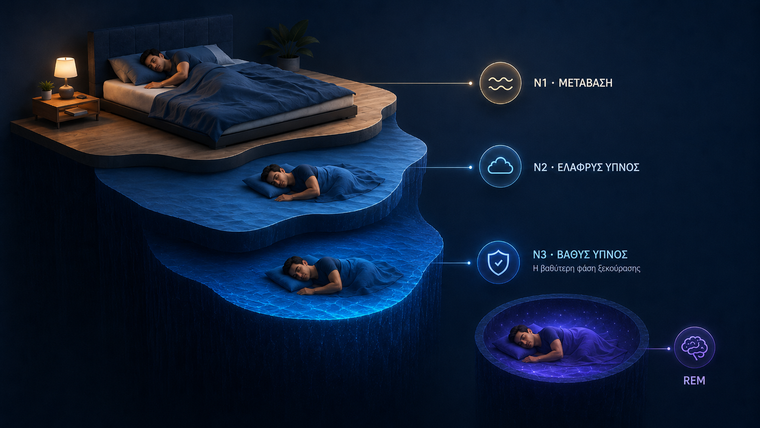
During the night you go through several sleep cycles, and each has stages of lighter and deeper sleep. Deep sleep, also called slow-wave sleep, is the stage where the brain and body quiet down the most and it is hardest to wake up.
It is believed that this is when the body restores itself, the brain processes memory and energy builds up for the next day. That is why the quality of sleep matters, not only the hours.
How much deep sleep you need
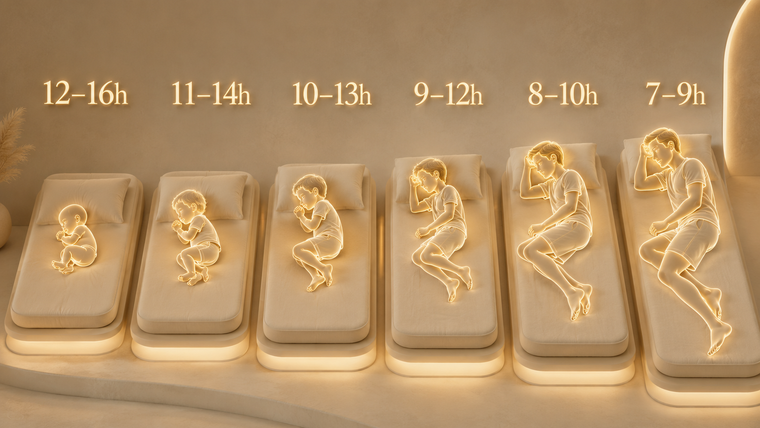
There is no single number that suits everyone. Needs change with age and from person to person, and deep sleep usually appears in the first half of the night, when you sleep several hours without interruption. A good indicator is how you feel when you wake up: rested and full of energy, or heavy and sleepy.
What happens when it is missing
When sleep is not enough or not good, you may feel sleepy, struggle to concentrate and have a low mood. Long-term lack of sleep has also been linked to other health problems. If you sleep badly for a long time or are very tired during the day, talk to a doctor.
10 habits for deeper sleep
Sleep hygiene is simply a set of good habits. You do not need to try them all from the first day; choose two or three and add the others slowly.
- Go to sleep at the same time. A steady rhythm helps the body know when to rest.
- Take a warm shower or bath before bed. For many people it helps them relax and fall asleep more easily.
- Drink a soothing herbal tea a little while before bed.
- Think of something good. Before you close your eyes, recall five pleasant things that happened during the day.
- Try breathing exercises in bed: slow, deep breaths that calm the body.
- If you cannot fall asleep, get up. Do something calm, such as reading, for 10–20 minutes and go back when you feel sleepy.
- Keep the bed for sleep. Avoid working, eating or watching TV there, so the brain links the bed with sleep.
- Switch off devices well in advance. The stimulation from screens makes it hard for the mind to relax.
- Air the bedroom about an hour before you sleep and keep it dark.
- If you nap at noon, keep it short. 10–20 minutes is enough, so it does not spoil your sleep at night.
It also helps to watch caffeine and alcohol in the afternoon and evening, because both can spoil sleep. If you want to start with just one thing, start with the steady schedule: it is a change that can bring a big difference and costs nothing. Give it two to three weeks before you judge whether it works, and note how you feel in the morning.
The mattress matters too
Deep sleep needs a bed where the body stays in a natural position without pressure. On every mattress page, firmness is shown on a 1–10 scale: up to 3.5 is soft, 4 medium-soft, 4.5–5 medium, 5.5–6 medium-firm and 6.5 and above firm. Sleep Match asks how you sleep and what you like and suggests mattresses.
Care matters too. A double-sided mattress is turned over every six months, and a mattress with a pillowtop, or with layers on its top side only, is turned head to foot every six months. Also leave a gap of 1–2 cm around the mattress in the bed.
In short
Deep sleep is not caught with tricks; it is built with steady habits and a quiet, dark bedroom. Browse the mattresses and, if you can, try them in one of the more than 200 stores where ORION mattresses are available.




DISCUSSION
Readers’ comments.