


Oversleeping, or hypersomnia, means you sleep much more than you need and still wake up tired or sleepy during the day. It may be due to accumulated sleep deprivation, an irregular schedule or a health issue. If it happens often or lasts a long time, talk to a doctor.
How much sleep you need
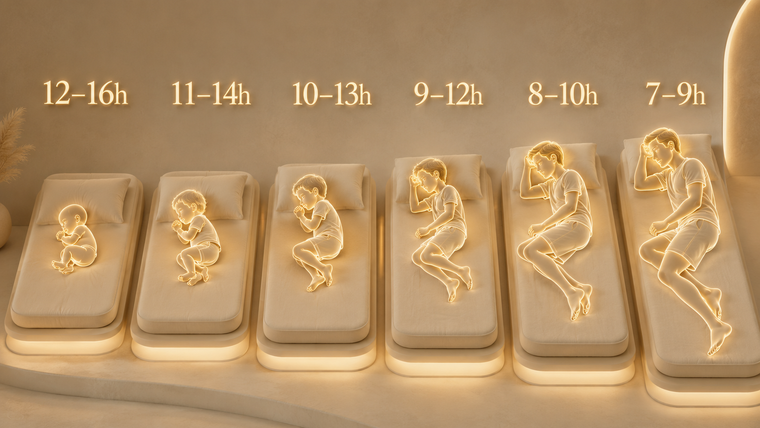
Sleep needs change with age and differ from person to person. For most adults, seven to nine hours a night is usually mentioned. They are also affected by pregnancy, an illness, strain at work or a period of intense stress.
All of these can cut the hours you sleep or spoil their quality. That is why counting hours alone is not enough: how you feel when you wake up matters too.
Possible causes of too much sleep
When you go without sleep for days or weeks, the body often tries to make up for it with a very long sleep. Sleep that is constantly interrupted, alcohol and an unsettled way of life can also leave you tired.
A lot of sleep and sleepiness may also be linked to health conditions, such as:
- sleep apnea
- thyroid problems
- depression
- narcolepsy
- certain medicines
You cannot know this on your own. A doctor is needed to find the cause.
How it can affect you
Too much sleep may bring low energy, restlessness, headaches and difficulty with memory and concentration. Studies link very long sleep to other health problems as well. That does not mean sleep is the cause, but it is one more reason not to let it go unnoticed.
Why «sleeping some more» does not always solve it
When you feel tired, it is natural to want to sleep more, on weekends or after a hard week. One long sleep now and then is not a problem. But if it becomes a habit, it can shift your internal clock and make Monday even harder.
Morning light helps the body understand that the day has begun. As soon as you wake up, open the shutters or step outside for a little, and avoid staying in bed for hours after waking.
When to talk to a doctor
Talk to a doctor if you sleep much more than you used to for weeks, if you struggle to stay awake during the day, or if sleep makes your work and daily life difficult.
The doctor may ask you to keep a sleep diary, noting when you sleep, when you wake up and how often you wake, or to rate your sleepiness on a special scale. In some cases they suggest a test at a sleep centre. You can start right now by recording your sleep for a few weeks.

Habits that help
If your doctor has not found anything that needs specific treatment, some simple habits can help you find more restful sleep again.
- A steady schedule. Go to bed and get up at the same time every day, even on weekends. This way the body learns when to expect sleep.
- The right environment. Keep the room cool, dark and quiet.
- Fewer screens. The light of screens in the evening can disturb the rhythm of sleep. Switch off devices one or two hours before bed.
- A careful lifestyle. Caffeine close to bedtime can overstimulate you, and alcohol may make you sleepy but spoils the quality of sleep. A herbal tea helps you relax. Exercise helps, but not right before you sleep.
And the mattress?
You spend about a third of your life in bed, so it is worth having a mattress that truly rests you. If you do not know what suits you, Sleep Match asks how you sleep and what you like and suggests mattresses. On every mattress page, firmness is shown on a 1–10 scale, from soft to firm.
In short
If you sleep many hours and wake up tired, do not let it pass. Talk to a doctor and look after the rhythm and the environment of your sleep. Browse the mattresses too, to find the one that rests you.





DISCUSSION
Readers’ comments.