


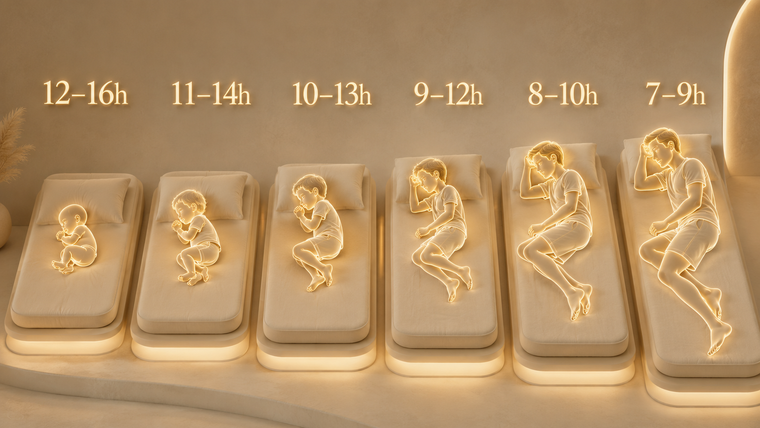
The hours of sleep a person needs change with age: newborns sleep more than 14 hours in 24, adults about 7 to 9. The numbers below are a rough guide and not a rule, because everyone has their own needs.

When we talk about a healthy lifestyle, we usually think of diet and exercise. But restful sleep is just as much a part of it.
How do you know if you are sleeping enough? If you wake up without much effort, have energy during the day and do not need coffee all the time to function, your hours probably suit you. If you often feel sleepy in the day, get irritated easily or find it hard to concentrate, it is worth looking at your sleep habits and environment.
Newborns and infants
In the first months babies, each at their own pace, sleep about 14 to 17 hours in 24, and a little less up to their first year. The sleep is not continuous, because it is interrupted for feeds, and gradually it gathers more at night. For anything about your baby’s mattress and sleeping position, and for any question you have, ask your paediatrician.
Children
Toddlers and preschool children need about 11 to 14 hours of sleep a day, and primary school children about 9 to 11. When they do not sleep enough, they feel tired and their concentration and mood at school may suffer. A steady routine before bed helps, with a bath, a story and the lights out, and fewer screens in the evening. Children grow fast, and the bed that fits them today may not fit in two years.
Teenagers
In the teenage years the body clock shifts: teenagers get sleepy later in the evening and want to wake up later in the morning. The school timetable does not allow it, though, and many go short of sleep during the week. If you have a teenager at home, do not see it as laziness: it is often simply the rhythm of their age. A rough guide is 8 to 10 hours, because their bodies and minds are still developing.
At weekends they often sleep much longer, which may confuse their body clock even more. A schedule that stays as steady as possible on all days helps, along with fewer screens in the evening and daylight in the morning.
Adults
Adults need about 7 to 9 hours a night to rest the mind and body. Many sleep less, because of work, family and stress, and end up tired physically and mentally. A few habits make a difference: steady hours, less coffee in the afternoon and evening, exercise that ends early, and a dark, quiet and cool room. If you work shifts or nights, sleep is harder: keep a steady routine as far as you can and a dark room for your sleep, and if the tiredness persists, talk to a doctor.
Do not try to «make up for it» at the weekend with long hours of sleep. For many people it is better to sleep similar hours all week and, when needed, take a short nap during the day.
Besides the hours, how well you sleep counts too. A mattress and a pillow that suit you help you wake up more rested. Browse the mattresses and the pillows, or ask Sleep Match, which asks how you sleep and what you like and suggests mattresses.
Age 65 and over
Many people over 65 do not sleep well enough at night. They often need more time to fall asleep, and sleep is affected by illness and medicines. As a rough guide, at this age the hours that suit most people are 7 to 8. Daylight, a little movement, a short midday nap and less coffee in the afternoon help. If a medicine keeps you awake or makes you sleepy, ask your doctor.
If you sleep much less or much more than what suits you, and you feel constantly tired, talk to a doctor.
In short
Sleep hours change with age, but what we are after is the same for everyone: waking up rested. And the bed plays a part in that. Most ORION mattresses can also be made in custom sizes: you enter the width and length on the mattress page and see the price at once. Try them in person in one of the more than 200 stores where ORION mattresses are available.




DISCUSSION
Readers’ comments.